By Jonathan Seal · Research-led guidance · Updated
As an Amazon Associate I earn from qualifying purchases. About our affiliate links.
The short answer
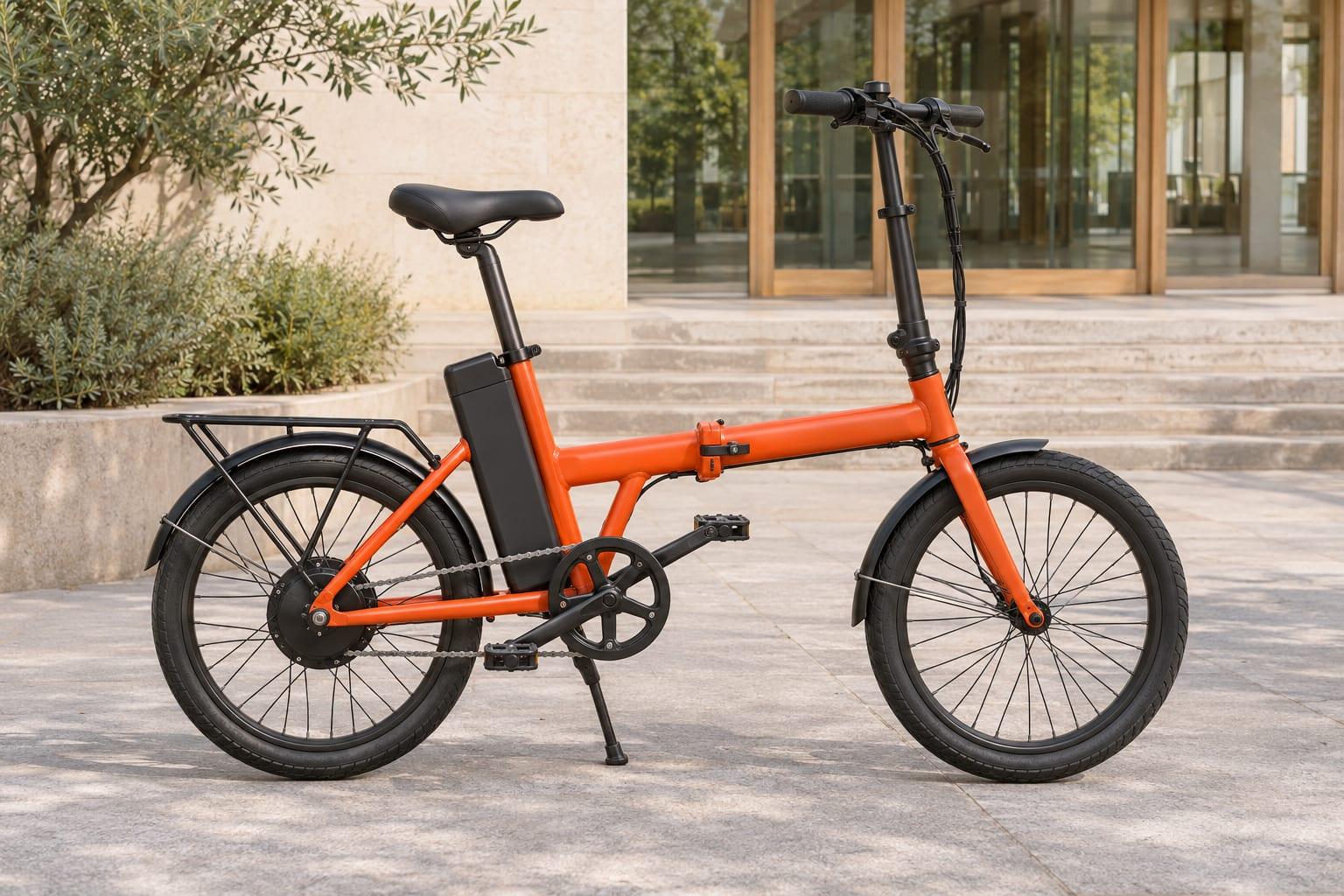
Folding doesn't change the rules. A folding e-bike is treated like any other e-bike, so what matters is its motor, its top assisted speed and whether it has a throttle.
Under federal law, an e-bike has working pedals, a motor under 750 watts and a top speed under 20 mph on the motor alone. Most states then sort e-bikes into three classes. Class 1 helps only while you pedal and stops at 20 mph, Class 2 adds a throttle and also stops at 20 mph, and Class 3 helps only while you pedal and stops at 28 mph. Each state decides where each class can ride, and some, like New Jersey, now do things differently.
On transit, a folded e-bike is usually treated like a folded bike, but there are extra rules: no riding it in stations, no charging, and sometimes a weight limit. On planes, the battery rules rule almost every e-bike out.
This is a summary of official sources read on November 19, 2026, not legal advice. Check your own state and transit agency before you ride.
| Class | How the motor helps | Assistance stops at |
|---|---|---|
| Class 1 | Only while you pedal | 20 mph |
| Class 2 | Pedaling or a throttle | 20 mph |
| Class 3 | Only while you pedal | 28 mph |
Definitions as the National Park Service gives them, read November 19, 2026. Most states use the same three classes, but each state writes its own law.
What counts as an e-bike
The federal definition is in the Consumer Product Safety Act. A "low-speed electric bicycle" has two or three wheels, fully operable pedals and an electric motor of less than 750 watts (1 horsepower), and its top speed on a paved, level surface on the motor alone, with a 170-pound rider, is less than 20 mph.
That definition decides which federal safety rules apply when the bike is sold. Where and how you can ride it is mostly up to your state, and that's where the classes come in.
The three classes, and where states differ
The three classes come from model legislation promoted state by state by PeopleForBikes, the US bike industry's trade group. It said in 2021 that 36 states had adopted it, and it now describes the system as "used in most states."
States that use the classes still set their own rules within them. The common differences are which classes can use bike paths and trails, and whether there are helmet or age rules.
New Jersey is the clearest exception. PeopleForBikes says its new law eliminates the three-class system there: pedal-assist bikes like Class 1 stay "low-speed electric bicycles," while what other states call Class 2 and Class 3 become "motorized bicycles," with licensing, registration and insurance requirements.
Before you buy, check two things on your state's motor vehicle or transportation site: how it classifies the bike you want, and where that class may ride.
Trails and national parks
Local paths and trails set their own e-bike rules, so look for signs or the park district's site.
National parks follow one rule nationwide. The National Park Service says e-bikes may be allowed only where traditional bicycles are allowed, and never in wilderness areas. Each park's superintendent decides which roads and trails are open to them and may treat the three classes differently, so check the park's own page before your trip.
Trains and transit
Folded, most e-bikes are carried under the same rules as folded bikes, but agencies add conditions.
Amtrak allows electric bicycles under 50 lb in checked baggage and on trains with walk-on bike service, and bans gas-powered bikes. Its folding bike rule, folded size under 34 x 15 x 48 inches in place of a carry-on, doesn't mention e-bikes separately, so check with Amtrak before counting on it.
In New York, the MTA's personal electric vehicle policy says foldable devices must stay folded and latched in stations and on board, can't be ridden, sat on or stood on, and can't be charged anywhere in the system. Only foldable ones are allowed on local buses, none are allowed on express buses, and overhead racks are only for foldable devices of 30 lb or less.
Chicago's CTA allows folding bikes and scooters, "including e-bikes," on trains and buses if they're folded.
Weight is the practical limit. The folding e-bikes we've looked at weigh from about 36 to 74 pounds, and you'll be carrying it through gates and up stairs.
Flying with a folding e-bike
In practice, you can't take the battery on a plane. The FAA limits lithium-ion batteries to 100 watt-hours each, and with airline approval you can carry up to two spares of 101 to 160 watt-hours.
To find a battery's watt-hours, multiply its volts by its amp-hours. A 48-volt, 7.8 amp-hour battery like the GOTRAX R1's is about 374 watt-hours, more than twice the largest the FAA allows. Most e-bike batteries are bigger still. If you're flying, plan to rent at the other end or ship the bike by ground.
Battery safety and UL 2849
UL 2849 is the safety standard for an e-bike's whole electrical system: the battery, the charger and the motor. New York City's Local Law 39 of 2023 requires every e-bike sold, leased or rented in the city to be certified to it by an accredited lab, and the city has enforced it since September 2023.
Wherever you live, look for that certification from a named testing lab on the bike or its listing. "Meets" or "in accordance with" UL 2849 isn't the same as certified. Charge at home, on a hard surface, with the charger that came with the bike, and never on transit, where it's often banned anyway.
Which folding e-bike fits the rules?
For the widest choice of places to ride, a Class 1 or Class 2 bike, assisted up to 20 mph, is the safer bet. Class 3 bikes are faster, but more places limit where they can go.
For transit, weight and fold size matter more than class. Check the folded size against Amtrak's 34 x 15 x 48 inches and the weight against any rack limit, like the MTA's 30 lb.
The GOTRAX R1 is the folding e-bike we've reviewed. GOTRAX lists a throttle and a 20 mph top speed, which is how Class 2 is defined, so check how your state classes it. At 45 lb it's heavy to carry, and its safety certification needs a closer look, as our review explains.
Common questions
Quick answers on folding e-bike rules.
Is a folding e-bike legally different from other e-bikes?
No. The rules depend on the motor, the top assisted speed and whether there's a throttle, not on whether the bike folds. Folding matters for transit, where folded bikes are often allowed when full-size ones aren't.
What's the difference between Class 2 and Class 3?
Class 2 can run on a throttle without pedaling, and its assistance stops at 20 mph. Class 3 helps only while you pedal, and its assistance stops at 28 mph. States often limit where Class 3 bikes can ride.
Can I take a folding e-bike on Amtrak?
Amtrak allows electric bicycles under 50 lb in checked baggage and on trains with walk-on bike service. Its carry-on rule for folding bikes doesn't mention e-bikes, so ask Amtrak before you travel.
Can I fly with a folding e-bike?
Not with its battery, in almost every case. The FAA limits lithium-ion batteries to 100 watt-hours, or up to two spares of 101 to 160 watt-hours with airline approval, and e-bike batteries are usually several times that.
How we researched this guide
We read each source below on November 19, 2026: the federal definition, the National Park Service's e-bike page, PeopleForBikes' e-bike law pages, the FAA's battery rules, Amtrak's and the MTA's own policies, and New York City's notice on certified e-bikes. The CTA's rule and the weights of folding e-bikes come from our transit and weight guides. Laws change, so check your state's own site before you ride. This isn't legal advice.
- 15 U.S.C. 2085: low-speed electric bicycles →
- National Park Service: e-bikes →
- PeopleForBikes: model e-bike laws in 36 states (2021) →
- PeopleForBikes: New Jersey's e-bike law →
- FAA: lithium batteries →
- Amtrak: bikes →
- MTA: personal electric vehicle policy →
- MTA: bikes →
- NYC: buy only certified e-bikes and batteries →
- UL: e-bike certification (UL 2849) →